


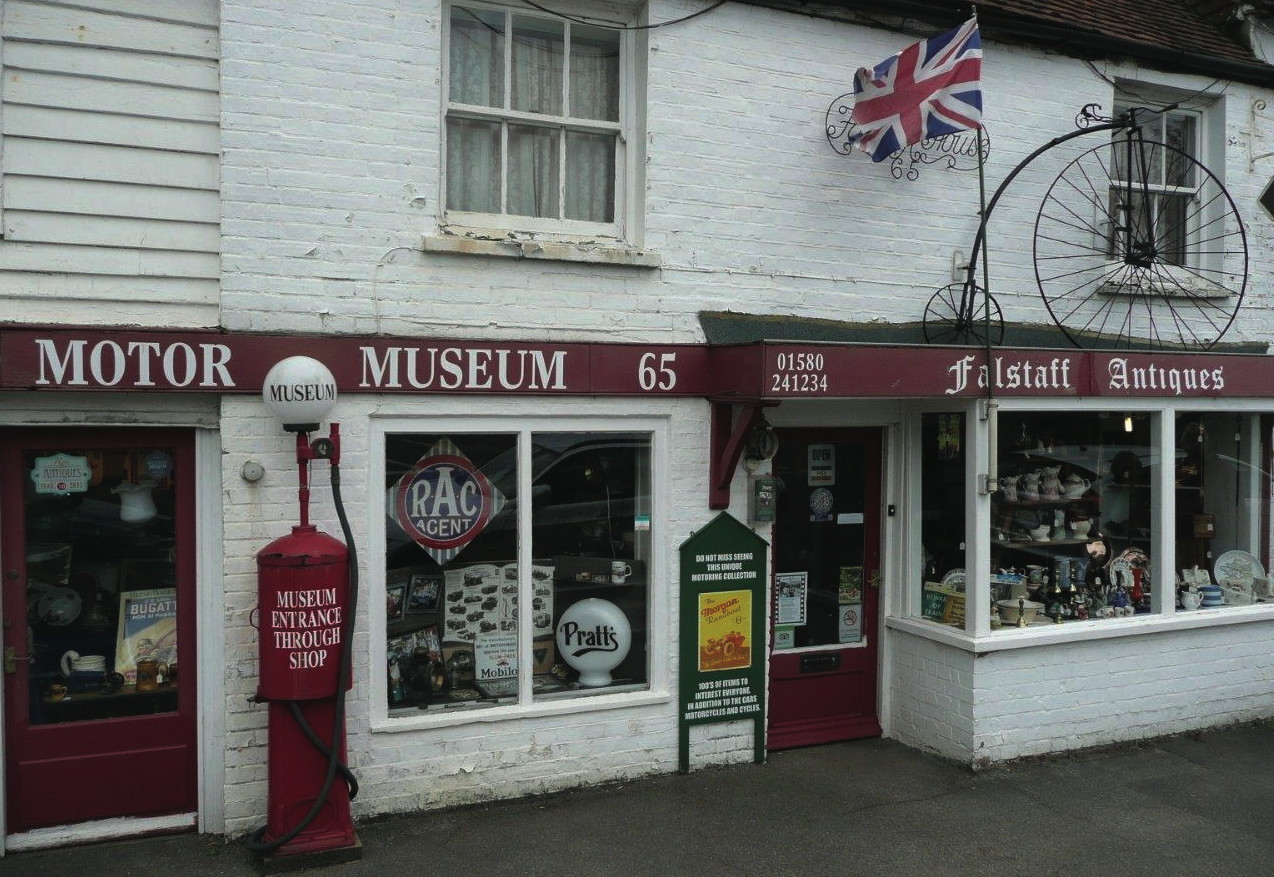
Falstaff Antiques in the village of Rolvenden is the home of the C M Booth Collection of Historic Vehicles. We are certain that during the week before Mog13 there were very many Morgans parked near here.
In 1983 Derek gave the remains to Chris Booth, thinking that as he had done nothing with them in 50 years, this might be a better way to ensure the car eventually returned to the road. Chris was then lucky enough to come across some remains of an early 3 wheeler chassis, which provided some of the lugs needed for the front end. Charlie Jenner then proceeded to build the frame, to dimensions that Chris had calculated.
In more recent years, when Martyn Webb was sorting through archives at Malvern, a drawing of the 4 wheel chassis came to light, this was dated 1914, but the bevel box was of a different form, also the lower chassis tubes were stated to be 11?4" (a feature for the 1914 models) whereas the lower tubes on the remains were only of 1” (indicating this had been constructed in 1913).
But Chris had various other jobs and restorations (including the recreation of the original 1909 car) which meant that for possibly 20 years there was not much progress with the build.
However numerous items were acquired in readiness, an original 5 spoke steering wheel and column came from the Beaulieu Autojumble, along with a very nice set of Acetylene lamps still in their box. Oil pump, tank caps, control levers, front hubs, steering arms, carburettor, magneto, brake drums, drive sprockets and dogs, selector forks, crown wheel and pinion and the important part, an engine, all were found over the years. All of this means that quite a lot of original Morgan parts will go into the restoration.
In 2012 the restoration commenced in earnest; Chris designed the back axle, helped by the sketch in the patent drawing. This year will see the Chassis as a complete rolling unit.
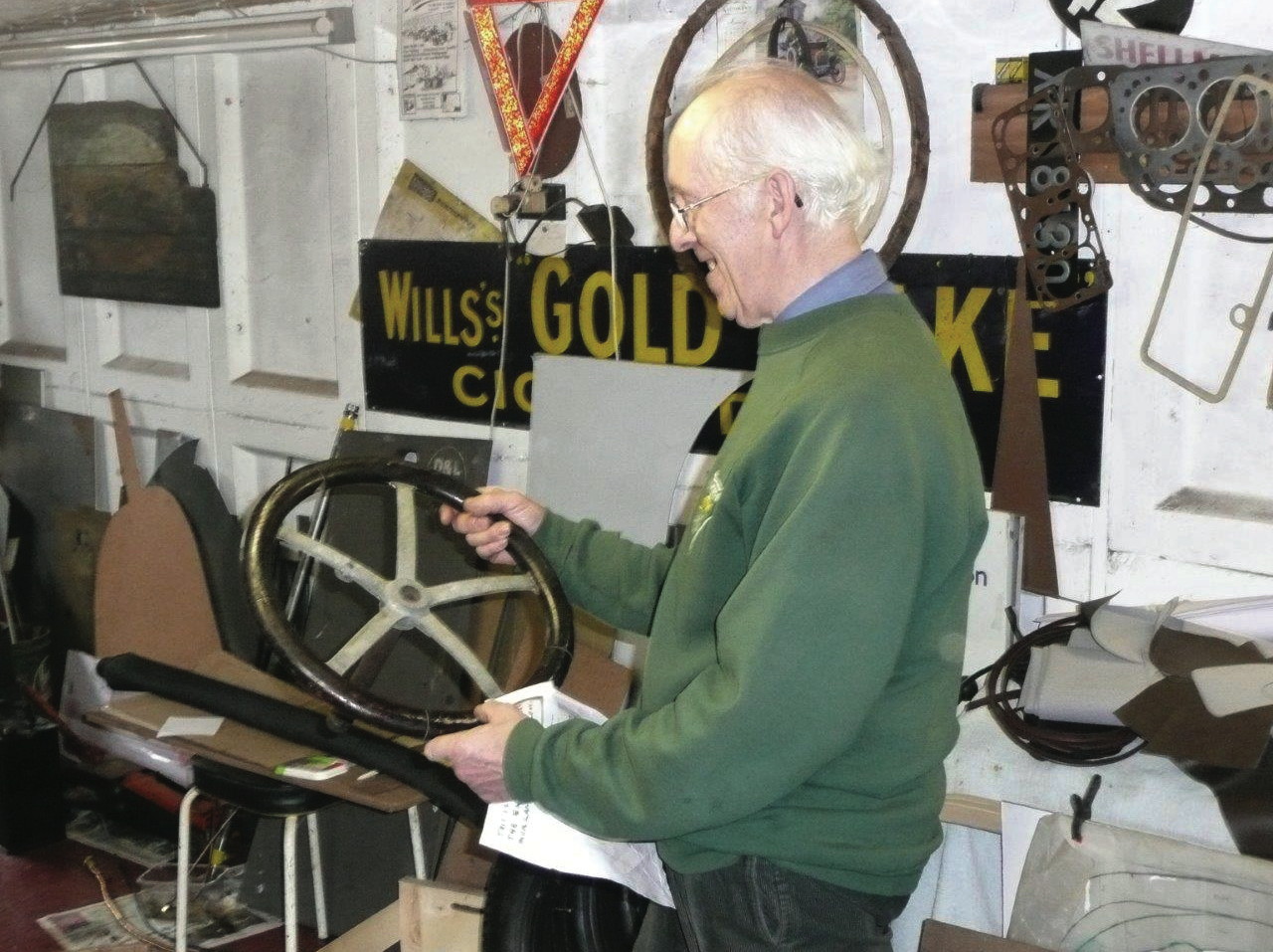
The original Morgan, in 1909, had tiller steering, although a steering wheel was available on early production models for an extra cost of around 12/6d (62 pence these days!).
HFS soon realised that the wheel was the best option so it was standard by the time the prototype four wheel car was planned. The original has not survived, but Chris managed to obtain an authentic five spoke steering wheel from an Autojumble at Beaulieu. One day - and not too long now - this will be steering the recreated Morgan ‘Quad’.
Anyone involved with a project of this type will know that many hours will be spent tracking down elusive parts.
When he started contemplating the restoration Chris did not have a suitable engine spare - but he had one for a 1910 car, whilst fellow enthusiast Martyn Webb had a 1913 engine, but lacked a suitable one for the replica of a 1910 car that he was planning.